Military Draft Row Over Ultra-Orthodox Men Could Decide Israel's Next Government
A deepening dispute over conscription for ultra-Orthodox men is straining Prime Minister Benjamin Netanyahu's coalition ahead of an election this month.
By Herald Column Staff ·
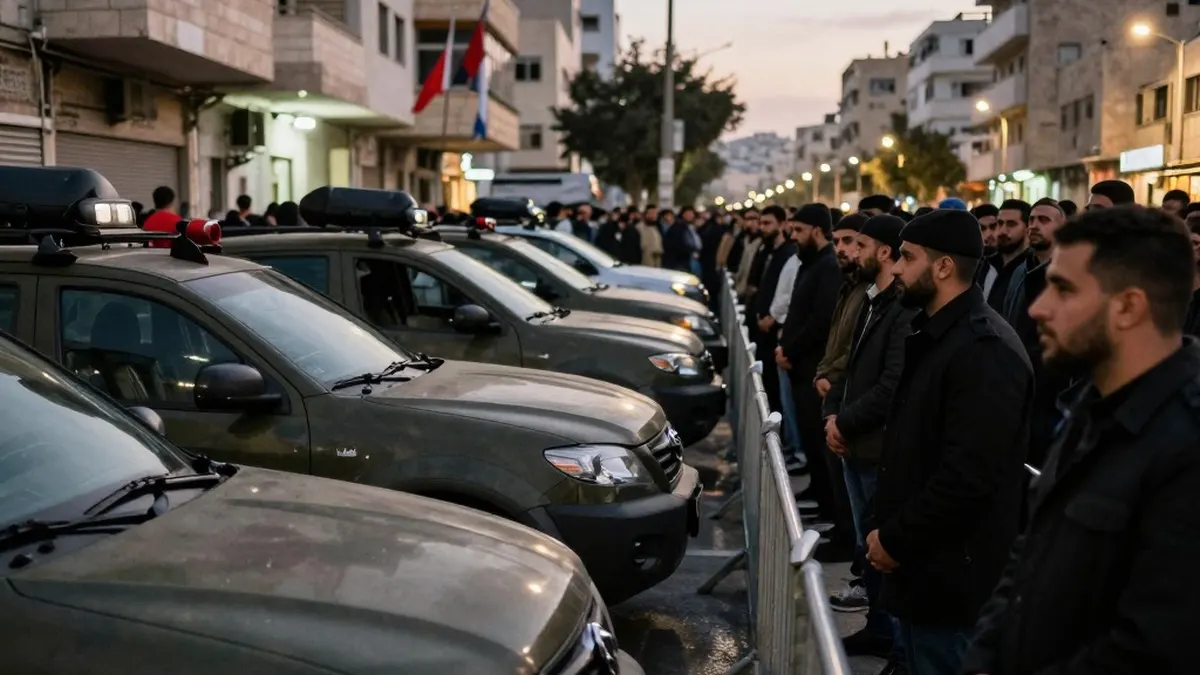
Hundreds of ultra-Orthodox men in white shirts and black frock coats recently confronted military police in the Israeli city of Modi'in, shouting "Nazis" at the officers. The officers had come to arrest a young Haredi man who failed to report for military service. The clash, in early October and seen by the BBC in a video, is one of many in recent months that have exposed one of the deepest divisions in Israeli society.
The Haredim are estimated to make up about 14% of the population, and their birth rate is far higher than that of other Israelis. If current trends hold, they could account for one-third of the Jewish Israeli population by 2050. Subsidies that let many of them study religious texts full-time are estimated to cost the government 35bn shekels (£8.4bn) a year. Until recently, they were also exempt from military service.
That exemption for students at yeshiva institutions dates to the early days of the state, when the Haredim were a tiny community recovering from the Holocaust. It has become far more contentious as Israel fights on several fronts after the attacks of October 7. Religious students and their rabbis fear that military life could draw young men away from the community. Rabbi Dov Landau, one of its most senior leaders, said soon after October 7 that only Torah students could protect Israel spiritually, adding: "They protect us."
Most Israelis disagree. Polls show support for conscripting the ultra-Orthodox rose throughout the war in Gaza, while the IDF has complained of a manpower shortage and many Israelis have served hundreds of days over three years. Pollster Dahlia Scheindlin said right-wing communities in particular are furious that the government is protecting the blanket exemption while others serve and die. Two years ago, the Supreme Court ruled the exemption effectively void. Hundreds of thousands of Haredim responded with protests that blocked main highways, and they have repeatedly tried to stop arrests of students who evade the draft.
The issue is now central to the election. The two traditional Haredi parties, United Torah Judaism and Shas, have been part of Netanyahu's coalition and used their leverage to try to block enforcement of the court ruling. UTJ left the government but kept supporting it from outside, while Shas stayed in. Centre-right challenger Gadi Eisenkot has rejected their stance, saying a country that sends its best to fight "cannot tolerate a reality in which a state within a state exists." UTJ candidate Eliakim Stark drew rebukes from across the spectrum after comparing draft evaders to Jews persecuted in the Holocaust.
Activist Daniel Goldman said the Haredi parties see the state as wanting to change their young men, and have hardened their positions. UTJ's Yitzhak Goldknopf, a former minister, warned that if there is no choice, the Haredim "will leave" the country. Without these parties, Netanyahu's alliance would fall short of the 60-plus seats needed for a Knesset majority. Scheindlin said the coalition is polling at about 50 to 52 seats, compared with the 64 it won in 2022. All of Netanyahu's challengers back ending the exemption and cutting funds to those who refuse the draft.
A new group, the Haredi Public Party, is offering a middle path and is fielding two women, a first in the community. Candidate Ziva Ginz said those devoted to full-time Torah study should keep learning, while others should serve in frameworks where a young man can "enter as a Haredi and finish as a Haredi." Commentator Anshel Pfeffer cautioned that most Haredi voters still follow their rabbis, and that far-right National Security Minister Itamar Ben-Gvir is making inroads among young Haredim, with his Jewish Power party gaining in polls.
No bloc appears close to a majority, so coalition bargaining is expected after the vote. Scheindlin said any small party can become a kingmaker, but opposition parties have staked their platforms on the draft and are unlikely to woo the Haredi parties without serious concessions. The ultra-Orthodox parties have long been kingmakers, but this time they may instead help bring down the king.
Source: BBC News