New venture secures $200 million to breed superior service dogs
A firm backed by the CIA and major investors is funding the development of genetically modified canines for military and law enforcement use.
By Marcus Johnson ·
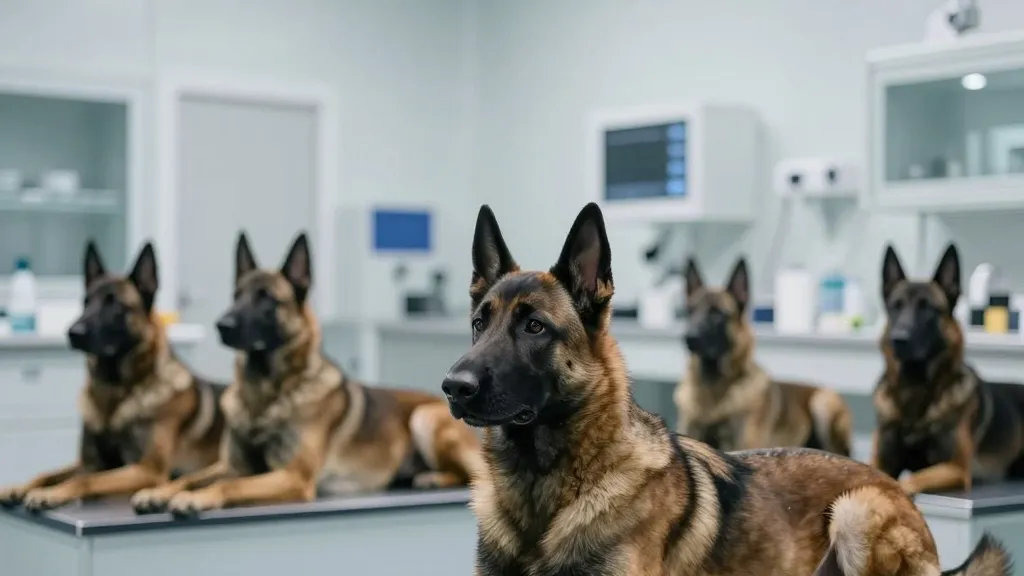
The U.S. military relies on dogs to detect explosives and perform other high-risk work. However, the nation’s supply of such animals is shrinking, prompting a new venture to step in with significant capital. Warhound, a company formed to engineer canines for the defense sector, recently announced it has closed a funding round totaling $200 million.
The investment values Warhound at $1.2 billion. The list of backers includes Sequoia, 8VC, Corner Ventures, and In-Q-Tel, a venture firm supported by the CIA and other U.S. intelligence agencies. The company’s plan involves modifying the genetics of dogs to improve their health and performance. This work is intended to support the U.S. military, law enforcement, and emergency response teams.
Warhound’s strategy focuses on a specific problem. The company stated that more than 80% of working dogs for the U.S. military are sourced from Europe. Furthermore, less than half of those animals are fit for service. This creates a reliance on foreign nations for a critical asset. The company aims to produce dogs suited for demanding missions. Ben Lamm of Colossal Biosciences said many dogs fail training due to inherited issues like poor eyesight or the high possibility of cancer, hip dysplasia, or muscle atrophy.
The partnership involves two key figures. Ben Lamm is the CEO of Colossal Biosciences, and Palmer Luckey is with Anduril. They met at a conference roughly a year ago. They discussed the military's working dogs, and Lamm researched how those animals are bred. Lamm said he believed dogs could be enhanced for health, longevity, and “for things like speed and agility or enhance olfactory sensors for bomb sniffing and whatnot.” The plan involves taking cell lines from top-performing breeds, specifically the Belgian Malinois and German Shepherd, and storing them in a biobank.
The process involves editing genes. The team intends to add genes that improve performance and remove others that do not. This results in “a new type of dog.” Anduril will supply the hardware and software for the animals. This includes protection vests and goggles. The gear is designed to assist dogs and handlers with situational awareness. For example, Lamm described bulletproof vests containing sensors that send data to handlers. Lamm stated, “The idea is, if we make the dog safer, make it healthier, make it perform better, it’s going to perform better in the line of duty.” He added that Anduril’s additions will make the dogs safer and healthier beyond their genetics, “on top of the dog, not in the dog.”
The first batch of dogs is scheduled for cloning and incubation. Births are expected early next year. Service could ideally begin within two years. Viagen, a Colossal-owned company, will partner with Warhound to clone the dogs. Warhound does not yet know the price for its animals. It expects to sell to first responders, the Department of Defense, military service groups, and police forces. The company is working with the American Humane Society to certify its training program. The company said it is working under the guidance of the American Humane Society to help certify Warhound’s training program for the new dogs. The American Humane Society said in a statement that it applauds the companies for inviting the group to have a seat at the table.
Source: TechCrunch