Musk Claims Suppliers Speeding Up Terafab Equipment Ahead of 2028 Target
The joint venture between Tesla and SpaceX aims to begin mass chip production in 2028, a timeline Musk describes as aggressive but necessary for future AI demands.
By Miguel Hernandez ·
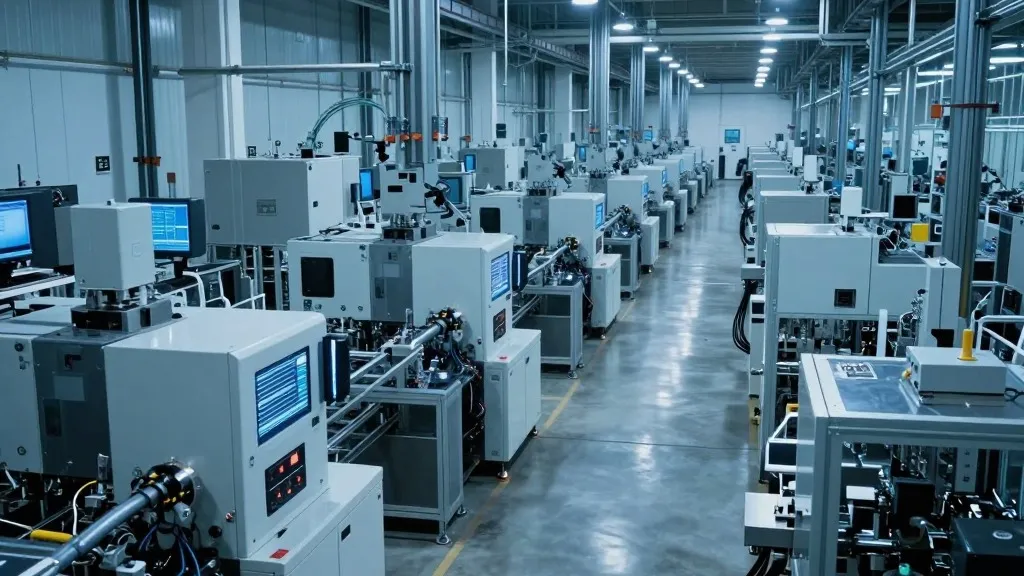
The semiconductor supply chain is currently stretched thin, yet executives claim new capacity is arriving sooner than previously thought. On October 20, Elon Musk announced during a SpaceX earnings call that major equipment vendors are accelerating deliveries for Terafab, a massive chip manufacturing facility planned for Gibbons Creek, Texas.
The timeline for this joint project between Tesla and SpaceX has moved quickly through the past year. Intel joined the venture in April 2026 to help co-develop silicon fabrication technology using its 14A manufacturing process. SpaceX intends to produce its first experimental test chip at its Austin research facility around the second quarter of 2027. The primary goal remains full volume production at the Texas site by the third or fourth quarter of 2028.
Musk described these dates as highly aspirational, noting they carry significant uncertainty. He stated that the company is grateful to ASML and other suppliers for accelerating equipment deliveries to meet this outcome. ASML, the sole commercial supplier of the expensive extreme ultraviolet lithography systems required for leading-edge chips, is a critical partner in this effort. Unofficial sources had previously suggested the first EUV tool would arrive in mid-2027, though it is unclear if that aligns with the new expedited schedule.
Beyond lithography, the project relies on a broad network of global manufacturers. American firms such as Applied Materials, Lam Research, and KLA Corporation will provide front-end processing and metrology machinery. Japan’s Tokyo Electron is also involved. Additionally, Tesla and SpaceX are in negotiations with approximately ten South Korean equipment makers, including Hanmi Semiconductor and HPSP, for specialized packaging and process components.
The commercial stakes are high. Musk claimed that once fully operational, Terafab’s chip output would generate value comparable to the GDP of the twentieth-largest nation in the world. The facility aims to produce one terawatt of AI computing power per year, far exceeding current global totals. This output is intended to supply chips for xAI clusters, Tesla’s self-driving vehicles, Optimus robots, and SpaceX’s orbital data centers.
In related news, Musk outlined ambitious computing targets for his AI ventures. He expects 2.5 to 3 gigawatts of active capacity by the end of 2026 and aims for a total of 13 gigawatts by the end of 2027. To achieve this, SpaceX and xAI are procuring a massive cluster of 440,000 Nvidia Vera Rubin GPUs, with deployment planned for the second quarter of 2027.
Skepticism remains regarding the project's scale. Gartner estimates total global AI-optimized data center capacity at roughly 44 gigawatts as of late 2026. Terafab’s target of one terawatt would represent nearly 23 times that current total. While experts question the feasibility of such rapid expansion, the announced expedited shipments suggest suppliers are committing resources to meet Musk’s aggressive deadlines.
Source: Tom's Hardware