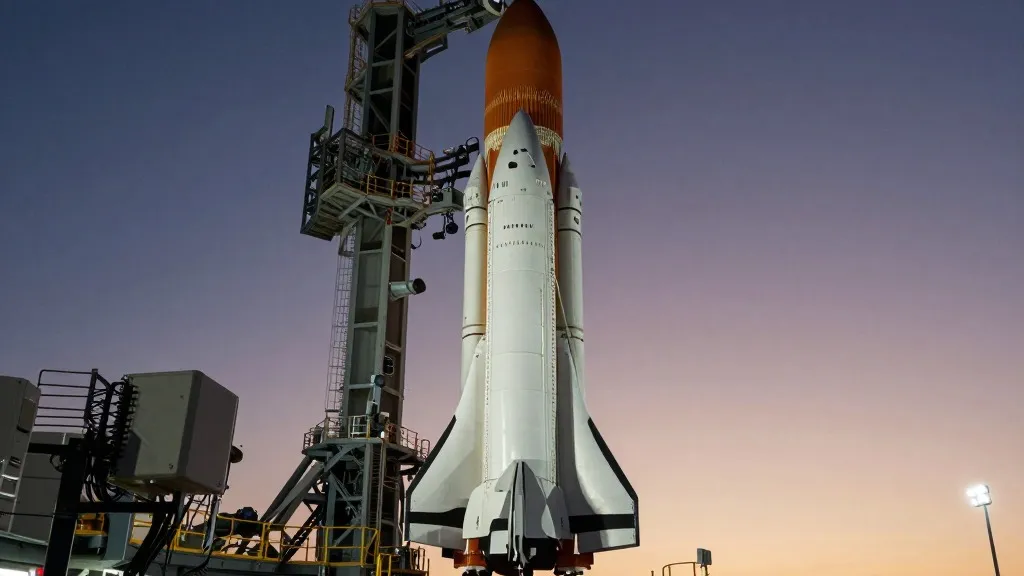
NASA Lays Out Plan for Lunar Return by 2028
The agency detailed new mission architectures for its commercial lunar landers and set a timeline for getting astronauts back to the Moon's surface.
By Anna Nowak ·
NASA Administrator Jared Isaacman outlined a detailed plan on Friday for returning astronauts to the lunar surface by 2028 as part of the Artemis Program. The briefing provided the agency's most comprehensive look to date at the architecture for its upcoming moon missions, confirming significant changes to how its commercial partners' landers will be used.
The revised plans for SpaceX call for the Orion spacecraft to dock with the Starship lunar lander while in high-Earth orbit, before the combined vehicles transit to the Moon. This approach was developed in response to a request from SpaceX engineers, who in early 2026 had asked to remove a prior requirement to dock with Orion in a near-rectilinear halo orbit around the Moon, a maneuver that required more energy.
For Blue Origin, NASA's mission architecture involves four launches of the New Glenn rocket but will not require any in-space refueling of its spacecraft. The plan also allows for the possibility of a rendezvous between the Blue Moon lander and Orion in low-Lunar orbit.
NASA officials stated that the Artemis III mission, a demonstration involving the docking of both the Blue Moon and Starship vehicles near Earth, remains on track to launch by “summer” 2027. The agency is also still targeting a 2028 launch for Artemis IV, which would include an actual landing on the lunar surface.
Administrator Isaacman expressed confidence in the revised schedule. “This is an achievable path we are on right now,” he said. “We have the mandate, we have the resources, and the support from our stakeholders to be able to execute, and that’s what we intend to do.”
The agency's ability to adhere to these ambitious launch dates remains a key question. The proposed timeline for returning to the Moon depends on the successful development and integration of complex new spacecraft and systems from its commercial partners, which have faced their own developmental hurdles.
Furthermore, the plan for the Blue Origin lander to potentially rendezvous with Orion in low-Lunar orbit introduces an additional layer of mission complexity that would need to be coordinated and executed. NASA has not provided further details on the circumstances under which such a rendezvous would occur.
While the agency has laid out a clear path forward for its lunar lander missions, significant technical and logistical hurdles remain to be cleared before the first crewed landing can be attempted. The open questions surrounding the timeline and mission architecture underscore the challenges ahead for the program.
Source: Ars Technica