Optimus Robot Timeline: External Deliveries Pushed to Late 2027
Tesla's CEO outlines ongoing difficulties with hardware durability and artificial intelligence development necessary for commercial release.
By Rahul Mehta ·
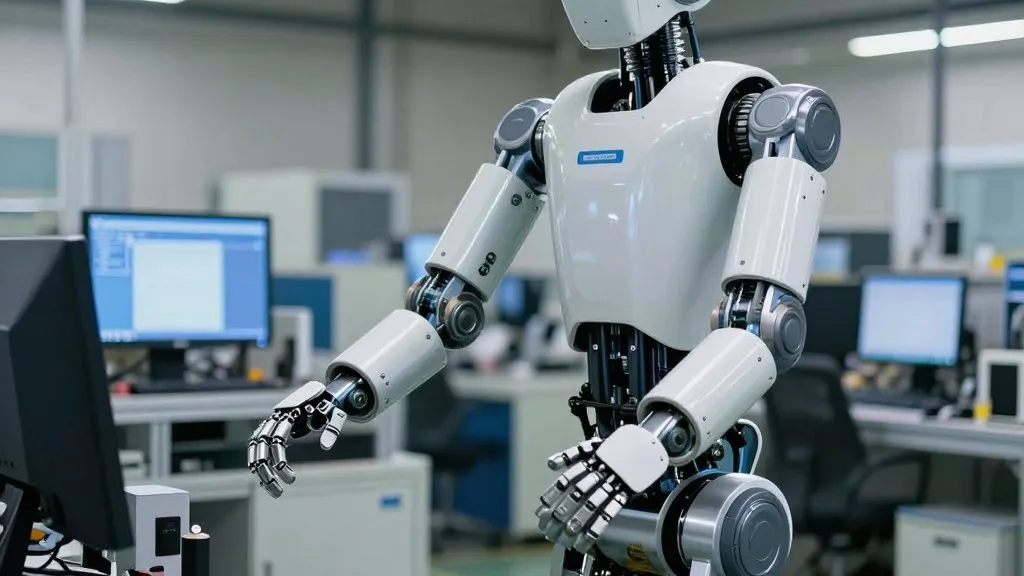
Tesla will not begin delivering its Optimus humanoid robots to customers outside the company until the end of 2027, a timeline announced by Elon Musk during the firm's Q3 2026 earnings call. This schedule represents a shift from previous targets, and it comes with a list of technical hurdles that must be cleared first. The company has identified the robot's hands, its long-term durability, and its artificial intelligence capabilities as the primary areas still requiring significant work before any commercial release can happen.
The manufacturing plan involves utilizing a high-volume production line located in Fremont, the former home of Model S and Model X assembly. While the majority of the machinery required for a capacity of one million units annually is installed, Musk indicated that reaching a rate of 20,000 units per week will take at least a year, and potentially longer. This delay is attributed to the fact that parts of the design are still undergoing changes. The immediate focus remains on solving issues related to AI, electromechanical design, and reliability, specifically ensuring the robot does not degrade after a month of operation.
Addressing the hardware challenges, a Tesla engineer noted that the hand is among the most difficult areas to engineer, along with custom gears that present reliability concerns. Musk concurred that the hand is the central issue, explaining that fingers must be soft enough to manipulate delicate objects while simultaneously surviving constant mechanical wear. He noted that robots cannot heal the way human skin does, making durability a critical factor. On the software side, Tesla is working to solve problems with its AI architecture, and the company intends to address this by building between 10,000 and 20,000 robots to practice tasks in a program called Optimus Academy.
The timeline for external delivery has shifted repeatedly over the years. In 2024, Musk indicated that Optimus would be built for internal use in 2025 and potentially in high volume for other companies in 2026. Earlier this year, he stated that Tesla would produce about 10,000 robots, with several thousand performing useful work by the end of the year. He later acknowledged that none were. Currently, the company's own Q3 shareholder letter describes the units leaving the Fremont line as the first production-quality bots manufactured, implying that all prior units did not meet production standards.
Musk claimed that no other entity is even close to Tesla regarding general-purpose humanoid robots, but competitor activities suggest a competitive landscape. XPeng activated an automated production line for its IRON robot in Guangzhou in September, with over 80% of core processes automated. XPeng aims for mass production by the end of 2026 and deliveries in the first half of 2027, a timeline comparable to or slightly ahead of Tesla's. Meanwhile, Boston Dynamics began producing its electric Atlas in January and reports that all 2026 deployments are committed, including an initiative with Google DeepMind.
The challenges facing Tesla are not isolated to the company. Boston Dynamics has adopted a strategy regarding hardware that differs from Tesla's, prioritizing sturdy grippers for industrial parts over human-like dexterity. This approach may appear less impressive in demonstrations, but it avoids the specific hand durability issues that Tesla is attempting to solve. Tesla plans to install its AI5 chip in Optimus around April 2027, and Musk promised a video within a month or two showing the robot performing tasks that are not pre-programmed, addressing concerns that many humanoid demonstrations rely on scripted routines.
Source: Electrek