Tesla Strategy: New Maps for Self-Driving
Tesla is developing its own mapping system to correct common errors in its autonomous driving software after years of rejecting external map data.
By Neha Iyer ·
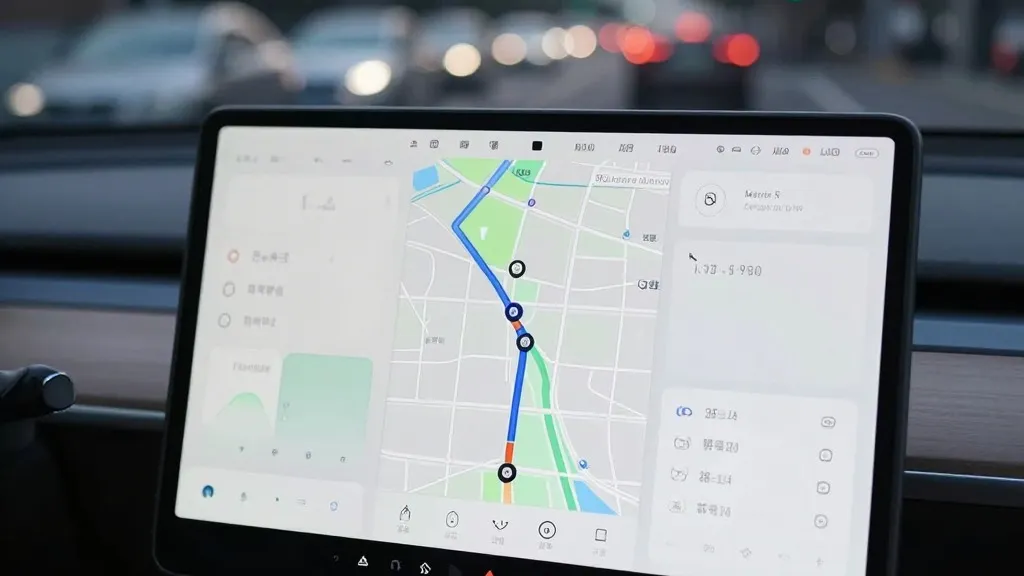
Tesla is finally building its own maps.
The company announced this shift during its Q3 2026 earnings call. The goal is to fix persistent issues in its Full Self-Driving system. These problems include misreading speed limits, poor parking, and inefficient route selection. Ashok Elluswamy, the head of AI at Tesla, described the new effort. He stated that Tesla should not rely on external providers for this critical data. The new system will use an AI-based architecture. It will learn from the collective data of Tesla's entire fleet. It will also adapt to individual driver preferences and voice commands.
This change marks a significant departure from previous claims. For years, Tesla's CEO argued that self-driving systems relying on maps were brittle. He often dismissed the use of lidar and high-precision maps as a fool's errand. He believed cameras and AI alone could solve driving anywhere. Now, the company is adopting a method similar to its competitor Waymo. Both companies use their fleets to map roads. The data helps the system understand what it cannot figure out on its own. Tesla fans often argued that the two approaches were different. However, the core function is similar. Both are creating proprietary maps to guide their vehicles.
The initiative started with a question from a shareholder. A retail investor noted that mapping continues to be a major problem for FSD. They cited speed limits, parking, and typical routes as the biggest issues. They asked why Tesla did not build its own maps instead of using third-party options. Elluswamy agreed with the premise. He said the technology will first handle the start and end of trips. This will happen with the release of FSD v15. Over the coming months, the system will take over navigation, parking, and destination handling.
Tesla has a mixed history with this technology. In 2015, the company said it was building high-precision maps with much greater granularity than standard navigation. It used data from its customer cars. Then, at its Autonomy Day in 2019, the message changed. The CEO said that relying on high-precision lane maps was a huge mistake. He called it a really bad idea that makes systems extremely brittle. He maintained that Tesla would use cameras and AI to drive anywhere. Seven years later, the company is building a map layer from its own fleet. It aims to fix the specific errors its vision system makes.
Critics point to recent failures as evidence that maps are needed. Last month, a road safety group in Belgium tested FSD in Brussels. The system sped in 55% of the 30 km/h zones it encountered. It averaged 44 km/h in these areas. The car's screen often displayed a 50 km/h limit in those zones. In the United States, the NHTSA is weighing an investigation. It is looking at claims that Tesla Robotaxis speed through active school zones. This involves about 1,000 Model Y and Cybercab vehicles. If a vision system cannot reliably read a simple speed limit sign, the need for a map becomes clear.
This approach brings Tesla closer to Waymo than it might like to admit. Waymo maps a city by driving sensor-equipped vehicles through it before launching service. It keeps those maps updated as its fleet drives. Tesla is now describing the same idea. Its cars collect visual data. That data feeds a Tesla-built map. This helps every car drive better. The main hardware difference is that Waymo cars have lidar on top. Tesla's Robotaxi service already operates inside small geofenced areas. A fleet-built map that gets more detailed over time could easily evolve into a high-precision system.
There is nothing wrong with using maps. Every serious self-driving program does. A map built from millions of Tesla cars could be a real advantage. If it fixes the speed limit problems, it is good news for everyone on the road. However, the years of messaging that Tesla did not need maps created a gap. The company sold FSD as a general solution. It dismissed maps and lidar as crutches. Now, Tesla is adding the map. It operates in geofences. The AI still struggles with simple signs. Waymo has been running a driverless service for years with its maps. Tesla is building its maps now. Unsupervised FSD for consumer cars is pushed to Q2 2027. It will only be available inside the Robotaxi fleet. Both companies are solving the same problem in very similar ways. The only major difference is that one uses lidar.
Source: Electrek